
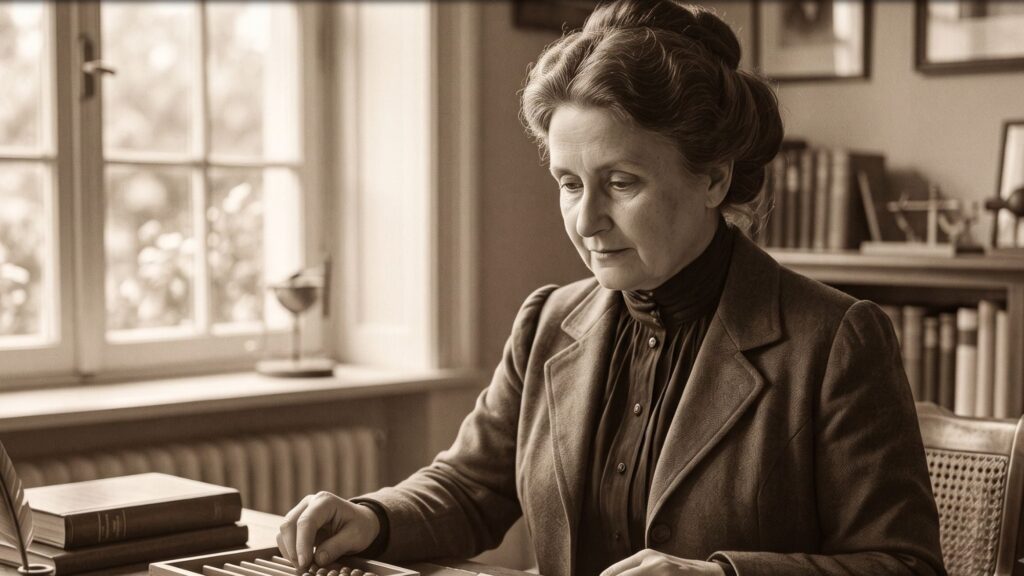

Italian physician and educator Maria Montessori, one of the most influential figures in the history of education, left behind a reflection that continues to resonate with parents, teachers, and child development specialists: “When a child feels confident in themselves, they stop seeking the approval of adults at every step.”
The quote summarizes one of the pillars of the Montessori philosophy: the goal of education is not to raise children who depend on external recognition, but rather individuals who are capable of trusting their own abilities, making decisions, and learning independently.
Her ideas remain relevant in a context in which child psychology experts emphasize the importance of strengthening self-esteem from the earliest years of life in order to promote emotional well-being and comprehensive development.
What does Maria Montessori’s quote mean?
With this reflection, Maria Montessori explains that a child who develops self-confidence does not need to constantly receive validation from adults in order to feel capable.
The educator believed that self-confidence is built when children have opportunities to solve problems, make small decisions, and experience the consequences of their actions in a respectful and safe environment.
By contrast, if a child depends on the constant approval of parents, teachers, or caregivers, they may develop insecurity and a fear of making mistakes, which can limit their initiative and creativity.
For Montessori, the adult’s role is to accompany, observe, and provide guidance when necessary, without turning constant recognition into the primary motivation for learning.
What is the Montessori method?
The Montessori method is an educational model created by Maria Montessori in the early 20th century that places the child at the center of their own learning process.
This approach promotes prepared environments where students can explore, investigate, and learn through experience while respecting their individual pace of development and personal interests.
In Montessori classrooms, the teacher acts as a guide, providing materials designed to encourage independent learning and helping children develop cognitive, emotional, and social skills in a comprehensive way.
Today, this method is used in thousands of educational institutions around the world and continues to be one of the most widely recognized educational models.
Characteristics of the Montessori method
Among the fundamental principles of the Montessori method are:
- The child actively participates in building their own learning.
- Autonomy and independence are encouraged from an early age.
- Individual developmental rhythms are respected.
- Learning takes place through exploration and hands-on experience.
- The environment is prepared to stimulate curiosity and discovery.
- Educational materials promote sensory and cognitive development.
- The teacher guides the process rather than imposing answers.
- Self-discipline, responsibility, and concentration are encouraged.
- Self-esteem is strengthened through personal achievements rather than solely through external recognition.
The purpose of the method is to develop individuals who are capable of thinking independently, solving problems, and building confidence in their own abilities.
Who was Maria Montessori?
Maria Montessori was born on August 31, 1870, in Chiaravalle, Italy. She was one of the first Italian women to graduate as a physician and later dedicated her career to the study of child development and educational innovation.
In 1907, she founded the first Casa dei Bambini (Children’s House) in Rome, where she began implementing an educational model based on the scientific observation of children’s behavior and respect for each child’s potential.
Throughout her career, she published numerous books on education, gave lectures in several countries, and was nominated multiple times for the Nobel Peace Prize for her contributions to education.
Maria Montessori died on May 6, 1952, in Noordwijk, the Netherlands. More than a century after the birth of her method, her ideas continue to influence educational systems around the world and millions of families seeking to foster autonomy, self-esteem, and the comprehensive development of children.
The Italian physician and educator Maria Montessori, one of the most influential figures in the history of education Read More