
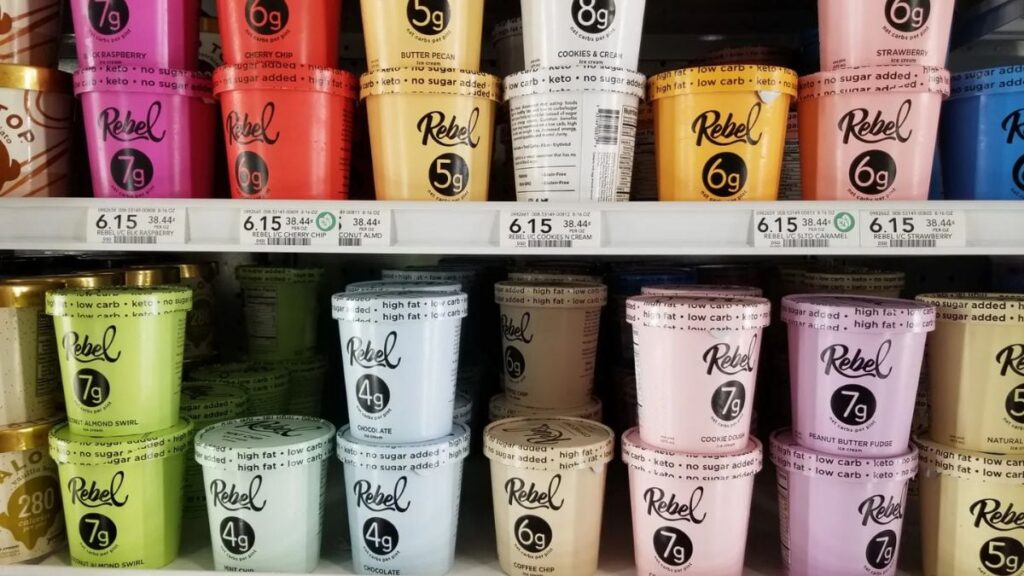

Keto ice cream brand Rebel Creamery has filed for bankruptcy, shaking up the U.S. healthy food sector. The company formalized its filing in federal court just days after the resolution of a lengthy intellectual property lawsuit, a ruling that ultimately sealed the firm’s financial fate.
ALSO READ Hardee’s Franchisee Files for Bankruptcy: What Happens to the Restaurants Now?
Why did Rebel Creamery file for bankruptcy?
A trademark infringement lawsuit ended in a judgment that pushed Rebel Creamery into Chapter 11. The company filed with the U.S. Bankruptcy Court for the District of Utah on August 14, seeking legal room to restructure its operations following the courtroom defeat.
Why was Rebel Creamery sued?
The dispute traces back to 2021, when Van Leeuwen accused Rebel Creamery of copying its packaging design to the point of confusing consumers. The plaintiff demanded both a redesign of the product packaging and financial compensation for sales generated using the contested design.
Judge Eric Komitee, of the U.S. District Court for the Eastern District of New York, presided over the case in a bench trial. He found deliberate similarities between the two brands: monochromatic cardboard cartons, matching lids, pastel color palettes, cursive uppercase lettering, and a shared minimalist aesthetic. Based on those findings, he ordered Rebel to redesign its packaging.
The case was resolved on July 16, 2026, when Komitee set the amount Rebel Creamery must pay Van Leeuwen at $23.785 million in profits tied to the misuse of its visual identity.
What’s next for the Rebel Creamery brand?
Rebel isn’t backing down. On August 12, the company filed an appeal with the U.S. Court of Appeals seeking to overturn the decision. While that process plays out, it remains unclear what will happen to its retail locations, an issue Rebel Creamery has yet to publicly address.
The history of Rebel Creamery
Rebel Creamery was founded in September 2017 in Utah by Austin and Courtney Archibald, a couple who started following the keto diet as an experiment to cut back on sugar. As they adjusted to that lifestyle, they missed the homemade ice cream that had long been a family tradition, which inspired them to create their own low-carb, high-fat, no-sugar-added version.
The project got off the ground through a Kickstarter campaign that raised over $80,000 from 1,400 backers, giving the brand the momentum it needed to land on store shelves. Over time, the company expanded its lineup to roughly 20 flavors and secured shelf space at major retailers including Walmart, Target, and Kroger.
By 2020, the company had reached about $97 million in sales and roughly 50% distribution across the U.S. market, cementing its place as one of the leading brands in the “better-for-you” dessert category.
What is Chapter 11 of the U.S. Bankruptcy Code?
Chapter 11 allows companies to reorganize their debts, typically with the goal of continuing operations. It is one of the most complex bankruptcy procedures, in which the company must present a detailed reorganization plan and negotiate with creditors.
This legislation provides businesses with a chance for a fresh start, although it may also result in the partial transfer of asset ownership to creditors. As a result, business owners must carefully assess the costs and benefits before deciding to file for bankruptcy.
What benefits does Chapter 11 offer?
This section serves as an alternative to penalties, meaning that the company or individuals seeking it can avoid immediate dissolution, liquidation, and drastic cuts. During this process, the law allows the entity to continue operating and restructure without pressure from creditors. At the same time, it enables them to negotiate and propose a repayment plan for their debts.
Moreover, reorganization procedures under Chapter 11 offer the advantage that the company’s management retains control over the business, making the reorganization plans generally more effective, as the executives who stay in charge are the ones best familiar with the company, partnership, or individual involved.
⇒ SUBSCRIBE TO OUR CONTENT ON GOOGLE NEWS
A multimillion-dollar trademark infringement lawsuit led Rebel Creamery to file for Chapter 11 under the U.S. Bankruptcy Code Read More