
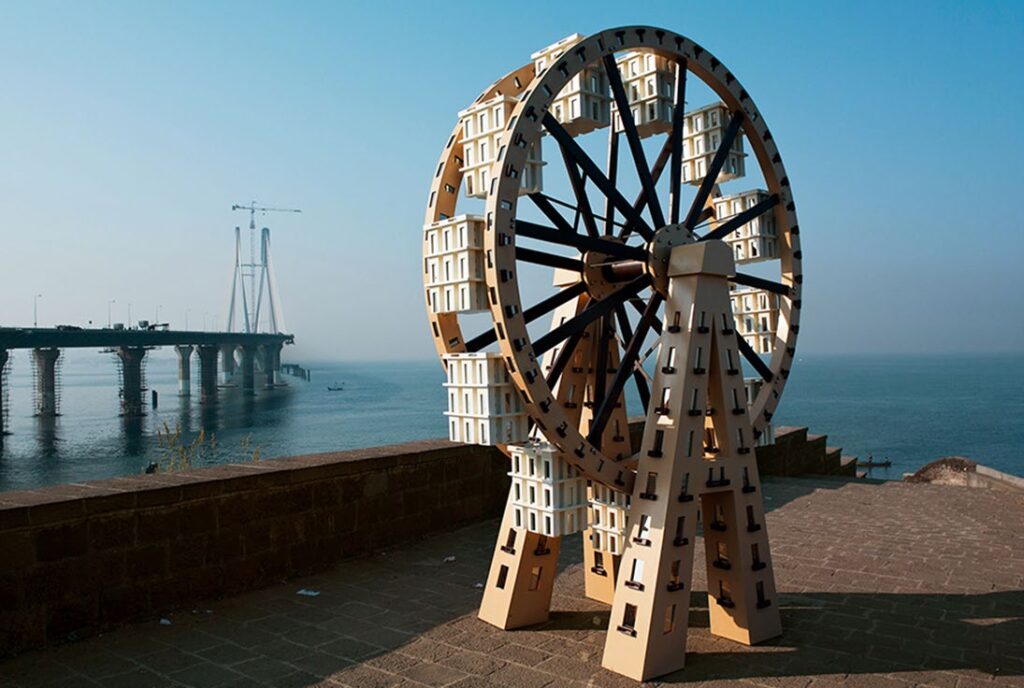
This dossier features artwork by the Indian artist Gigi Scaria. Through a wide range of media – painting, photography, installation art, sculpture, and video – Scaria’s work reflects the ongoing urban and rural transformations in India and their impact on the country’s social classes and other strata of society. The featured sculptures and installations stand as memorials to the lived experience of India’s people amid the contradictions, deepening inequality, and unrealised aspirations born of the country’s underdevelopment.
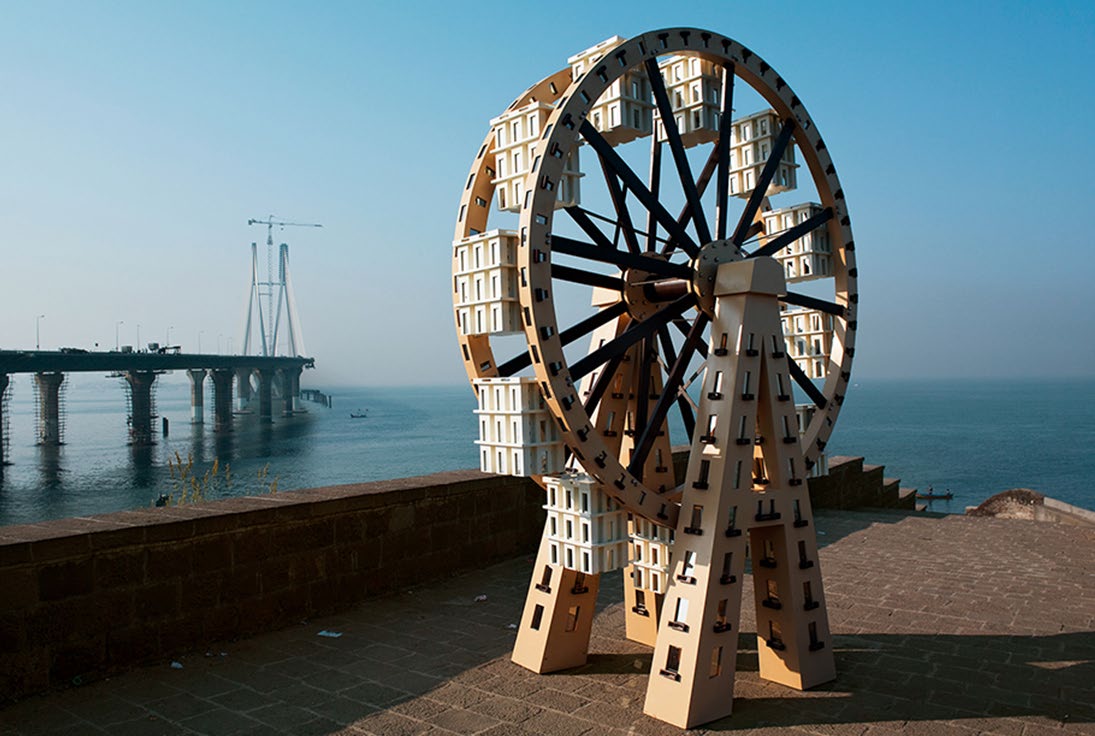
Gigi Scaria, Wheel, 2009.
Introduction
The global economic order is in flux and globalisation is in a prolonged crisis. In the 1990s, Western capital under US hegemony promoted trade liberalisation and the spread of global supply chains that exploited labour cost differentials between the Global South and the North. Now, these very same processes are being undermined by the same hegemon under US President Donald Trump’s leadership to reverse globalisation’s unintended consequence: the erosion of US economic and technological dominance by a rising power in the Global South.
Even as the global economic order is being reshaped, the Indian economy remains weighed down by the inertia of thirty-five years of liberalisation. Its structural problems, rooted in entrenched inequalities and aggravated by neoliberal policies, have stifled the development of a broad-based, technologically advanced domestic industrial base. Owing to the dismal state of Indian industry, most of the workforce remains excluded from it, confined to insecure, low-wage, low-productivity employment sustained by sheer desperation for livelihood. As a result, much of the population is trapped in various shades of poverty, even as official claims of a steep decline in deprivation are conjured through methodological sleights of hand.1
The persistent underdevelopment of industry, particularly manufacturing, lies at the core of India’s tryst with globalisation. The promises of liberalisation – to unlock India’s supposed potential – have produced a central tendency toward deindustrialisation, hollowing out formal employment while weakening productive capacity and deepening social inequalities.
Despite the current government’s bombastic appraisal of India’s importance on the world stage as Vishwaguru – literally ‘teacher to the world’, a term popular in Prime Minister Narendra Modi’s Hindutva rhetoric – and claims of high growth rates that are often mired in statistical controversies, it has been forced to confront these failures, which it does with obfuscations and accusations. Since Modi came to power as India’s prime minister in 2014, his go-to political strategy has been to blame all unpalatable facts on the opposition and previous governments, even as his tenure now stretches beyond a decade. There is no doubt that the neoliberal policies initiated by the Indian National Congress in the 1990s and subsequently pursued by every government since – including Modi’s right-wing Bharatiya Janata Party (Indian People’s Party, BJP), its most zealous adherent – have brought the Indian economy to this unfortunate state. Modi’s long tenure as chief minister of the western Indian state of Gujarat from 2001 to 2014 burnished his neoliberal credentials in the eyes of Indian and foreign capital.
But Modi’s response has been to double down on the same policies – worse, now on steroids – thereby exacerbating underlying problems, deepening inequalities, and entrenching the crisis further. Since becoming prime minister he has announced a series of grand policy initiatives such as Make in India, Startup India, Skill India, Design in India, and Design for the World. These initiatives were supposed to attract foreign capital into design and manufacturing in India for global markets, encourage Indian start-ups to enter new technology sectors, and upgrade the skill levels of the Indian workforce to align with world-class standards – all ostensibly aimed at revitalising Indian manufacturing while catering to Western markets. In practice, these initiatives have failed to strengthen manufacturing or reverse the trend of deindustrialisation. Most simply offered subsidies and tax rebates to corporations in the hope that industrial expansion would follow automatically, with predictably meagre results.
A much-publicised initiative along these lines was the Production Linked Incentive scheme for fourteen industries, foremost among them electronics, with the government handing out large subsidies to firms – both foreign and domestic – for manufacturing. But this scheme has largely amounted to subsidising the assembly of imported components, with negligible impact on India’s overall import bill or technological capability. The bulk of value addition for goods made in India, such as smartphones, is still done overseas while the burden of these subsidies ultimately falls on the people through cuts in public investment and social spending of the government. The structural constraints that hamper the development of India’s economy and industry cannot be addressed simply through subsidies to corporations or indiscriminate foreign investment flows; if anything, such policies only reinforce the structural malaise India inherited at independence, which was compounded after liberalisation.
Entrenched Inequalities: The Post-Independence Constraints on Industrialisation
When India gained independence in 1947, achieving technological and industrial self-sufficiency was widely seen as essential to sustain political independence, break from the colonial pattern of economic relations with the West, and absorb the vast underemployed agricultural workforce into industry to raise their living standards. Through a system of five-year plans – state-led national development plans that set priorities for investment and production – India embarked on a rapid programme of industrialisation centred on the development of heavy industry under state ownership. Meanwhile, private capital, drawing on this state-created base, produced consumer goods. As a result of this push, the first decade and a half after independence (roughly 1947–1962) witnessed an unprecedented phase of public-sector-led industrialisation, with manufacturing’s share in GDP rising from about 7% to 15.9% – a pace of industrial growth unmatched since.2 However, soon enough the quest for industrialisation met obstacles in the form of the deep agrarian and class inequalities in Indian society.
Land ownership was concentrated among a narrow rural elite while the land-hungry masses struggled to meet even basic subsistence needs. In the absence of egalitarian land reforms, widespread poverty curtailed domestic demand, creating an internal constraint that prevented Indian industry from achieving the scale needed for sustained growth. At the same time, the import-heavy, Western-style consumption patterns of the elite led to recurrent foreign-exchange shortages, imposing external constraints on growth.
Nonetheless, India’s strategy of import-substitution industrialisation, though it fell short of creating a broad-based and dynamic industrial sector, strengthened a domestic capitalist class dominated by a handful of large business houses, which expanded their economic presence and consolidated their influence over state policy.
The state functioned as a mediator between a dominant bloc of landlords and capitalists on one side and a mass of impoverished peasants, landless labourers, and a small industrial working class on the other. The regime avoided policies that could threaten elite interests – such as genuine agrarian reform or substantial taxation of the propertied classes. Consequently, state-led industrialisation relied on fiscal deficits rather than progressive taxation. Each round of fiscal expansion transferred greater surpluses to the big bourgeoisie, deepening inequalities. Their hunger for accumulation increased while the narrow domestic market imposed limits on their potential to accumulate. Thus, significant parts of the investible surplus in the hands of the Indian bourgeoisie found outlets other than industrial expansion.
As a result of these dynamics, industrialisation progressed in fits and starts, as every attempt by the state at concerted expansion soon ran up against the same structural constraints. These unresolved constraints, which precipitated into a severe balance-of-payments crisis, together with the loss of the Soviet Union as a key trading and financial partner (where rouble-rupee trade had insulated India from global currency shocks), ultimately left India exposed to the neoliberal turn of 1991, driven by the Bretton Woods institutions (the International Monetary Fund and the World Bank).
After Liberalisation
The liberalisation of the Indian economy, formally adopted in 1991, did little to remove the constraints that weighed down industrial development. What it did, however, was ease constraints on accumulation for the Indian bourgeoisie and lift the import controls that had previously restricted elite consumption. All this was achieved without the pains of developing a strong domestic manufacturing base.
Even as existing capacities were whittled away, the Indian elite could consume goods produced elsewhere and enjoy world-class lifestyles within an otherwise underdeveloped economy. This process allowed for faster and uninterrupted capital accumulation by Indian capital whether by the encroachment on public sector assets and natural resources, through expansion into import-intensive production for a domestic market, or by the displacement of petty producers, traders, and small-scale industrialists.

Gigi Scaria, Untitled, 2020.
The Four Tenets of Indian Neoliberalism
India’s neoliberal trajectory rests on four tenets that have directly undermined Indian manufacturing: the removal of trade barriers; privatisation and the weakening of the public sector; fiscal conservatism that curtailed public investment; and the opening of the economy to foreign capital, both productive (foreign direct investment, or FDI) and financial (portfolio) capital. Together, these tenets have sustained a pattern of growth that is reliant on credit and financial flows yet unmoored from robust industrialisation and autonomous technological development.
Trade Liberalisation
India began to pull down its tariff barriers in the early 1990s, leading to its accession to the World Trade Organisation (WTO) in 1995. In the initial years, the aggressive tariff cuts on agricultural products triggered a prolonged agrarian crisis, provoking a severe political backlash.3 As a result, tariff cuts in agriculture had to be halted after 1996. Yet liberalisation continued in manufacturing.
From 2000 onwards, trade liberalisation accelerated even more.4 Under pressure from the WTO Dispute Settlement Mechanism – pushed by the United States and the European Union – India removed most of its remaining quantitative import restrictions, which had protected segments of Indian industry (particularly small-scale industry).
India’s decision to subordinate industrial development to ‘free’ trade harmed domestic manufacturing, especially in the capital and intermediate goods sectors. Even as average tariffs were reduced, tariffs on capital and intermediate goods were much lower than those on consumer goods. That meant that while manufacturers of Indian consumer goods enjoyed moderate protection from the tariff regime, manufacturers of intermediate and capital goods had no such shield.
The new tariff regime benefited both domestic and foreign firms that operated in India’s consumer durables sector. Large Indian corporations that had historically focused on the production of consumer goods for the domestic market then chose to import cheaper machinery and intermediate goods rather than develop a domestic supply chain. Foreign multinational firms went further, treating India primarily as an assembly base. Consequently, the import intensity of Indian manufacturing increased sharply.5 In pharmaceuticals, for instance, India was largely self-sufficient in the production of active pharmaceutical ingredients (APIs). However, after liberalisation India became dependent on the import of pharmaceutical intermediates (the chemical ingredients used to make finished medicines). The Indian pharmaceutical industry now imports 70% of APIs from China, with some medicines, such as penicillin, entirely dependent on Chinese imports.6
Heavy reliance on imports eroded the domestic manufacturing of capital and intermediate goods.7 The shrinking of the domestic capital goods industry, which acts as an incubator for technological innovation, in turn stunted Indian industry’s technological capabilities. This weakening of technological capabilities further eroded Indian manufacturing’s ability to withstand global competition.
The Privatisation of the Public Sector
The systematic weakening of the public sector after 1991, through aggressive privatisation and chronic neglect, played no small role in the attrition of manufacturing. India’s capital goods industry, dominated by public enterprises that produced electrical machinery, machine tools, process plant equipment, earth-moving equipment, and industrial electronics, was left to decline as trade was liberalised and the state withdrew support. The ancillary small and medium enterprises that supplied components to these heavy industries collapsed under import competition and the loss of institutional support that followed.
At a time when electronics manufacturing has taken centre stage in global discussions on industry and technology, the fate of India’s nascent electronics sector in the 1990s stands as a testament to the damage inflicted by the liquidation of the public sector coupled with trade liberalisation.
In the 1970s, the Indian state took important steps to build a domestic electronics hardware industry through public sector enterprises. These firms – Electronics Corporation of India Limited and Bharat Electronics Limited – developed indigenous control systems for nuclear and defence applications. By the 1980s, the state had established Semiconductor Complex Limited (SCL) and Hindustan Computers Limited to develop capabilities in semiconductors, integrated circuits, and computing. SCL was founded in 1984, three years before the creation of Taiwan Semiconductor Manufacturing Company, the global semiconductor leader.
The government abandoned these efforts after liberalisation and sought to liquidate the budding electronics sector through the removal of tariff protections and withdrawal of state support. India joined the WTO’s Information Technology Agreement in 1997, which eliminated tariffs on a range of electronic goods, removing the policy space needed to develop competitive local industry. Rather than invest in manufacturing capabilities in the electronics sector, successive governments promoted an export-oriented model centred on low- to mid-skill information technology (IT) and back-office services for Western firms. This approach stunted long-term technological development in the electronics industry. The consequences are stark: today, India imports 80% of its IT hardware, 70% of its electronics components (62% from China), and 90% of its telecommunications equipment.8 Even electronics assembled domestically depend on imported components, with little local value addition. The country’s early initiative in public sector electronics was squandered, and India is now largely technologically dependent.9
What was done to India’s electronics sector has been repeated across other sectors, with the government neglecting or liquidating state-owned capital goods and heavy industries – areas in which big Indian capital remains unwilling to invest but which are nonetheless essential for technological advancement.
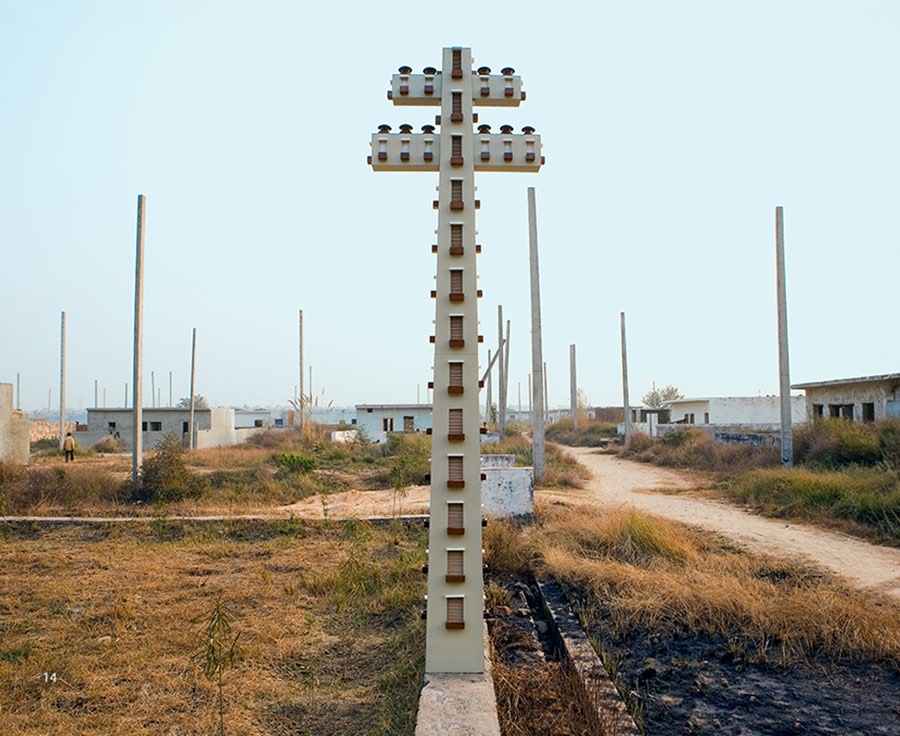
Gigi Scaria, Post Land, 2008.
Fiscal Conservatism
A key factor in the crisis surrounding the Indian economy – whether in the shaky foundation of its growth or the woes of manufacturing – is the fiscal conservatism ushered in by the neoliberal era. India’s pursuit of international finance capital and the associated investment flows meant that Indian governments could not significantly expand infrastructure spending or provide adequate support to industry without risking those flows drying up. In 2003, to appease international finance, India enacted the Fiscal Responsibility and Budget Management Act, capping the fiscal deficit at 3% of GDP.10 Though this cap was routinely breached, it acted as a reference point used to push back against any state-led spending in support of domestic industry, the public sector, or agriculture. Governments have routinely sold stakes in profitable public sector enterprises and siphoned off their investible funds to meet budgetary expenditures, even as taxes on corporate profits were steadily reduced. This has left public sector enterprises with a severe shortage of funds for expansion and technological modernisation. Despite being flush with funds, Indian private corporations have shown little interest in investing in research and development, while public sector enterprises have been deprived of the means to do so. As a result, Indian manufacturing remains heavily dependent on imported technologies.
Foreign Direct Investment
Since liberalisation in 1991, the Indian government has progressively dismantled barriers to foreign capital in both industry and finance. Today, except for sectors such as gambling, atomic energy, and railways – where even Indian private firms are barred – FDI is permitted in almost every area, often with complete foreign ownership. India has also eased capital-account restrictions, facilitating large inflows of short-term speculative finance. Official data show that, on average, about 30% of total foreign investment inflows since 2000 have come as volatile foreign portfolio investment (FPI). Even within what is classified as FDI, a considerable share consists of speculative capital, as India’s broad post-2000 definition of FDI includes portfolio holdings exceeding a 10% equity stake in an Indian company.11
While foreign investment was officially promoted as a means to advance industrialisation, technological upgrading, and export growth, these promises have remained largely unfulfilled. In practice, foreign capital has served mainly to finance the import-intensive pattern of post-liberalisation growth, thereby reinforcing the erosion of domestic industry.
This removal of barriers came with few regulations or guidelines. The Indian state did not, for instance, ensure that FDI into domestic firms was conditional on technology transfers and linkages, local sourcing and downstream industrial development, investment in domestic R&D, or limits on the repatriation of royalties. Half-hearted attempts to introduce some of these guidelines were abandoned under the slightest pressure from foreign capital.
Consequently, FDI has contributed little to technological advancement in Indian industry, with foreign firms establishing few R&D facilities within the country. Foreign-owned firms in India remain heavily import-dependent: their imports exceed their exports, thereby weakening domestic industrial linkages and reinforcing the process of deindustrialisation in the Indian economy.
While foreign investment has failed to deliver its promised benefits, the large inflows of foreign exchange injected substantial liquidity into the Indian financial system, expanding the liabilities of banks and compelling them to seek new avenues for credit expansion. This has resulted in credit-driven, import-intensive growth marked by elite-driven consumption and the concentration of capital in the hands of domestic monopoly groups at the expense of the public sector banks.
At the same time, foreign investment itself increasingly added to the external burden, as foreign firms imported more than they exported and remitted growing amounts abroad through royalty payments and profit repatriations. In 2024, for every $100 of gross investment inflow (FDI and FPI combined), $50 was taken out in the form of investment income. Excluding reinvested earnings – which do not bring in fresh foreign exchange – the imbalance is even starker: $66 was taken out for every $100 of net inflow. In recent years, such income outflows have often exceeded the total current account deficit. In 2024, repatriated investment income was three times the size of the current account deficit. As repatriations rise, India’s external account becomes increasingly fragile, setting the stage for deeper balance-of-payments stress in the years ahead. In a glimpse of such a future, in 2023 $116 was taken out of India’s economy in the form of investment income for every $100 of foreign investment inflows into the country.12
The liquidity generated by capital inflows fuelled credit-driven, import-led expansion and large trade deficits. These deficits in turn necessitated further foreign inflows, which deepened the drain on foreign exchange, creating a self-sustaining cycle of deepening dependence on external financial flows to manage India’s balance of payments.
A Growth Model Where Industrial Growth Is Incidental
Under India’s neoliberal trajectory, structured around its four central tenets, industrial growth has been incidental rather than central to the growth model. Instead of being rooted in industrial planning, successive governments have relied on bank credit (along with service exports) as a driver of growth – both to boost demand and to finance industrial infrastructure. In contrast, from independence until 1991, institutional lending in India was largely channelled toward agriculture, industry, and trade within the broader framework of economic planning, with only a marginal role for consumer credit.
Since 1991, consumer credit has shown a clear upward trend, with the banking sector – especially private banks – progressively redirecting lending toward home loans, vehicle loans, consumer durables, and credit cards. The share of personal loans in bank credit rose from 9.4% in 1990 to 25.2% in 2005, reaching 32.4% in 2024.13
Consequently, credit, particularly for home and automobile purchases, has been an important driver of growth. The expansion of housing credit resulted in an increased share of construction in GDP.
Similarly, the expansion of consumer credit for automobiles distorted the structure of manufacturing in favour of automobiles and generated increasingly automobile-dependent transport patterns, aggravating India’s infrastructure constraints.
Vehicle finance, together with the strong presence of big capital in automobile production, has deepened the state’s bias towards private transport and road construction, resulting in India developing the world’s second largest road network, soon to exceed that of the United States.14 Despite having a third of China’s land area, India has a road network that is already 2 million kilometres longer. Road construction has accelerated over the past decade, particularly for highways and expressways. One of the problems with this expansion is that it is constrained by land acquisition challenges. High population density and heavy reliance on agriculture make land acquisition politically sensitive and socially disruptive. Peasants, who rely on land as their primary asset, often resist dispossession. As a result, acquiring land is slow, expensive, and frequently contested – creating bottlenecks in India’s road-dominated logistics system.
On the other hand, the transport manufacturing system’s reliance on automobiles (including trucks) has driven up fuel imports, with more than 40% of petroleum products being consumed by the transport sector.15 This has had a negative impact on the trade deficit and has not contributed to industrialisation.
The shift to the auto-road development path has weakened the broader manufacturing ecosystem. India’s logistics costs are estimated to be two or three times higher than China’s, largely due to severe underinvestment in rail infrastructure. Rail transport – which is cheaper, less land-intensive, more energy efficient, and better suited for Indian conditions – has been deliberately undermined in favour of road transport.
Underinvestment in railways has meant a deterioration in the quality and speed of rail transport: conventional passenger trains in India have an average speed of 42 km/h, whereas in China they run at 86 km/h (the average speed of freight trains in India is 25 km/h, whereas in China they run at 42 km/h).
The credit-financed, automobile-driven transport system has resulted in high logistics costs and slow transport times, raising production costs and undermining the competitiveness of Indian manufacturing under liberalised trade.

Gigi Scaria, Hesitant Attempt, 2018.
Credit-Fuelled Investment and Non-Performing Assets
Not all neoliberal growth in India has been consumption-driven. Between 2004 and 2010, when the country experienced high GDP growth, expansion was sustained not only by consumption but also by investment driven by bank credit, fuelled by a glut of liquidity created by foreign capital inflows. With the banking system flush with liquidity, private banks expanded retail credit, while public sector banks channelled large loans to corporations for infrastructure projects in real estate, power, and steel, bolstering investment-led growth.
This credit boom did support investment-led growth, but it incubated a serious crisis. The mismatch between the long gestation periods of these projects and the short-term nature of bank liabilities, combined with corporate impunity and poor oversight, proved disastrous. Commercial banks – ill-equipped to evaluate and manage such projects, which should have been financed by development banks – were nudged by the government into lending to privately owned infrastructure projects. The result was a massive accumulation of Non-Performing Assets (NPAs), which peaked at $82.3 billion in public sector banks, while the physical assets that were created through these loans passed into the hands of India’s big capital at minimal cost to them through the resolution process of the NPA crisis.16
The nature of neoliberal growth in this period meant that the anarchy of the market determined both the direction and structure of Indian manufacturing. The interplay of domestic capital’s interests, the banking system’s credit preferences, and the elite’s consumption patterns – operating within a regime of global free trade and unrestricted financial flows – came to shape the trajectory of Indian industry, whether toward growth or decline.
Trade Deficits and Deindustrialisation: Two Sides of the Same Coin
Dependence on imported manufactured goods, fuel, and finance has meant that India has run a current account deficit in nearly every year except during the temporary collapse of global trade during the COVID-19 pandemic. The only periods when the current account deficit narrows are during times of economic contraction. The merchandise trade deficit stood at 2% of GDP in 1991 and has since risen to 7%, peaking at 10% in 2011.17 Petroleum products account for half of the merchandise deficit. The current account deficit has remained lower than that of the merchandise trade deficit only because of the surplus in export of services and the inflow of remittances from Indian workers. These remittances have provided the cushion for the otherwise dangerously high trade deficits that India’s neoliberal growth model generates. However, neither the export of services nor remittances can counteract the erosion of India’s domestic industrial capacity.
Deindustrialisation
For a long time, discussions on India’s political economy have used the term ‘deindustrialisation’ to describe the decline of non-agricultural crafts and traditional industries under British rule, which displaced millions from their customary occupations and drove them into poverty and hunger.
Nearly eight decades after independence, the term deindustrialisation is in currency once more – this time to describe the trajectory of the Indian economy under liberalisation, the effects of which have become unmistakable over the past decade. The underlying tendency toward deindustrialisation, concealed during periods of credit-driven high growth, has fully manifested in recent years, coinciding with the Modi government’s tenure.
Manufacturing’s share in GDP fell from 18.9% in 2008 to 14.3% in 2023, a level last seen more than sixty years ago in the initial stage of India’s industrialisation. Given the likely overestimation of manufacturing output in the new GDP series with the new base year, the actual share may be even lower than official figures suggest. The Index of Industrial Production (IIP) reinforces this picture: the average annual growth rate of manufacturing output as measured by the IIP was just 3.3% from 2011–2012 to 2024–2025, while it was 10.1% from 2003–2004 to 2010–2011. This deceleration in manufacturing is stark when viewed over the long term. The annual average growth rate of the manufacturing component of the IIP was 7.5% from 1981–1982 to 1989–1990, 8.0% from 1991–1992 to 1996–1997, and 5.4% from 1997–1998 to 2002–2003.18 In fact, since 2011, growth has been lower than in any comparable period over the past three decades. India now appears to be at risk of further deindustrialisation.
The Service Sector: A Poor Substitute for Industry
The relative decline of manufacturing over the past fifteen years has reinforced deep structural imbalances in the Indian economy. Today, the majority of India’s GDP originates from the service sector.
After 1947, the newly independent Indian republic began on a development path centred around the building of a strong industrial base. In 1951, at the start of the First Five-Year Plan, manufacturing accounted for 12% of GDP, while services stood at 36%. By 1990, these shares had risen to 19% for industry and 41% for services. That development path for industrialisation was abandoned in 1991, when the Indian government decided to liberalise – or more correctly neo-liberalise – the Indian economy and make it more service-oriented. Since 1991, manufacturing’s share has fallen to 14%, while services have increased to 48% in 2008 and then 55% in 2024. While the rule of the BJP under Modi exacerbated the woes of Indian manufacturing, the foundation for its weakening has been laid by successive governments following the neoliberal path that started in 1991.
Unlike manufacturing – which strengthens the technological base and supports real wage growth – the expansion of services does not necessarily generate similar effects. A strong manufacturing sector can enhance service capacities in areas such as transport, telecommunications, and IT, but when services dominate alongside a weak industrial base, they rely heavily on imported machinery and foreign technologies, as is the case in India.
The service sector in India, of course, is a broad category, not amenable to easy generalisation. Nonetheless, there is a clear dichotomy. On one side are a range of services – highly varied in nature but similar in their informality – providing low-wage, insecure, and largely unregulated employment, marked by low productivity. Workers in these activities often move between rural and urban areas and between agricultural and service employment, depending on the availability of work. These sectors effectively act as a refuge for surplus labour from agriculture, pushed out by stagnating agrarian employment and drawn into services due to the manufacturing sector’s inability – especially in the context of deindustrialisation – to absorb the growing labour force. Since 2017–2018, the share of manufacturing in total employment has in fact declined.
Retail trade and transportation are two such sectors. But even in these areas, employment spans a wide spectrum: for instance, in retail it includes small shopkeepers, pushcart vendors, hawkers, workers in kirana (neighbourhood) stores, and helpers in wholesale markets, while in transport it includes auto and taxi drivers, truck drivers, loaders, bus conductors, and workers in freight handling and logistics. Retail trade accounts for 12.2% of total employment and transport around 5.6%, which contribute roughly similar shares to GDP.19
These activities are often described as part of the ‘informal sector’ rather than the ‘service sector’, a term typically reserved for the IT, finance, and other modern services that form the other side of this dichotomy. Both segments of the service economy have seen consistently high growth rates over the past three and a half decades. The IT and finance sectors account for significant shares of GDP, despite being highly capital-intensive and offering limited employment. In the early 1990s, the IT sector’s contribution to national income was negligible (around 0.1% of GDP), and its share of employment was even smaller. By 2024, this predominantly export-oriented industry has expanded rapidly to account for 7.5% of GDP while employing only 1% of the workforce.20 Financial services followed a similar trajectory, with its share of GDP doubling from 3% in 1990 to 6% in 2004, and its employment share remaining under 1%.21
Together, the IT and financial services sectors account for 13.5% of GDP, which is comparable to that of the manufacturing sector, but they contribute less than 2% to employment, while manufacturing contributes 11.4%.22 In the non-agricultural economy, manufacturing comprises 17% of GDP and 20% of employment, while the IT and financial services sectors (both highly capital-intensive) contribute 16.5% of non-agricultural GDP and only 3.5% of its employment. The small number of high-paying jobs that these two sectors generate have weak multiplier effects in the domestic economy, given the import-intensive consumption patterns of this segment of the labour force.
This sharp divergence highlights the weak labour absorption of IT and finance, India’s most dynamic sectors, and illustrates the consequences of developing a high-tech service sector at the expense of manufacturing. One reason India has fully liberalised trade in electronics – one of the most dynamic and strategic branches of manufacturing in the contemporary global economy, unlike the automobile sector, which still enjoys considerable tariff protection – is that such liberalisation ostensibly supports the high-tech service sectors that primarily export to the West, particularly the United States. The consequence has been deindustrialisation coupled with continued dependence of close to half of India’s workforce on agriculture.
With 18% share in GDP, agriculture currently employs 46% of India’s workforce. Despite accounting for more than 50% of India’s GDP, the service sector employed only about 30% of the workforce in 2023–2024, highlighting its low level of labour absorption. Manufacturing, which at the time of independence was envisioned to draw a large share of the workforce out of agriculture, now contributes about 14% of output and provides barely 11% of total employment.23
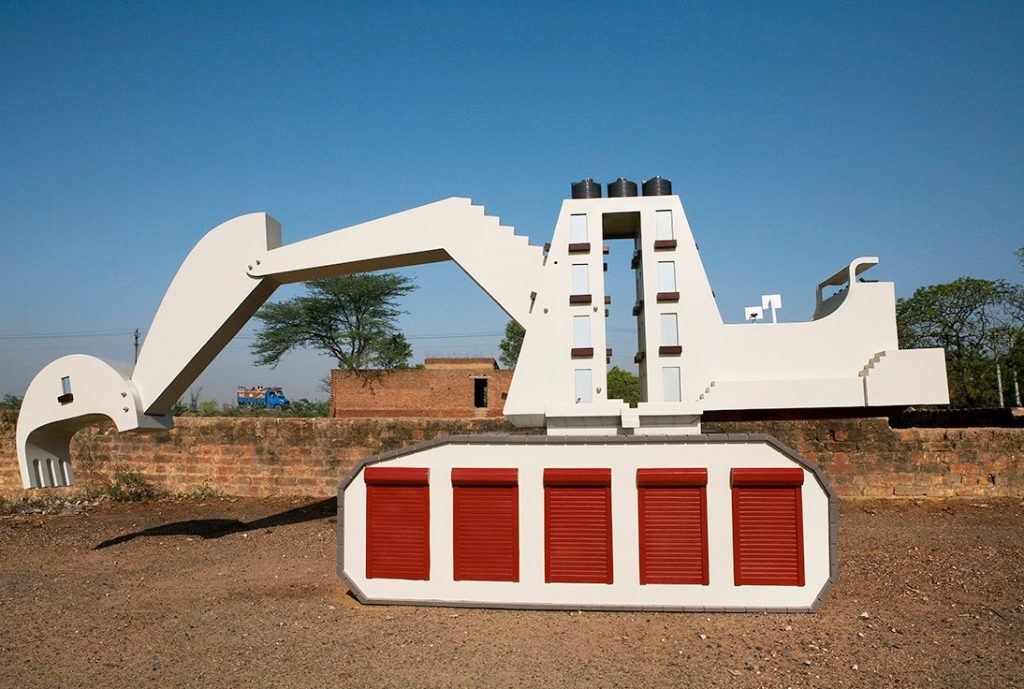
Gigi Scaria, Settlement, 2010.
Under India’s version of neoliberal development, manufacturing has been sacrificed to enable the export of skilled labour and services to Western markets, with the hope that these earnings would offset rising imports and compensate for not having a robust manufacturing sector. This has amounted to sacrificing India’s long-term industrial and technological capabilities for fragile and externally dependent sources of foreign exchange, ultimately undermining the country’s economic and technological sovereignty, for which a strong manufacturing sector is essential.
The Human Consequences of Deindustrialisation
India has a youthful population – a so-called ‘demographic dividend’ that could have been the basis for building a modern industrial economy and sharing the gains of technological progress. They should have better living standards and secure employment, allowing for a balanced life of work, rest, and leisure. For all the hype about India being a major economy, it remains an underdeveloped economy where a large share of workers’ incomes is spent on basic consumption such as food and where youth are employed in insecure jobs with uncertain futures.
India is squandering the youth of its workforce in make-do employment with stagnant wages. The country has seen a steep decline in the number of dependents – children and the elderly – relative to the working-age population: from 83% in 1966 to 47% in 2024.24 This enabled some reduction in extreme poverty, but with a limited impact. Yet with the ratio expected to start rising again after 2041, the space for India’s structural transformation is set to narrow.25 Industrial growth – which should have absorbed surplus labour and driven productivity and technological advancement – appears to have reached a dead end within the current model of economic growth.
A Way Forward
Bringing industrialisation to the centre stage of economic policy is of utmost necessity if India is to emerge decisively from the underdevelopment trap it currently is in. There is very little argument about it. The importance of industrialisation, and the limits of a service-led economic expansion, have become evident even to the votaries of neoliberalism in India. This is reflected in Modi’s constant invocation of schemes to promote manufacturing, even as his government adheres to neoliberal tenets more ardently than any of its predecessors – through the liquidation of the public sector, dismantling of the remaining barriers to foreign capital, promotion of automobile-led infrastructure, and generous tax breaks and subsidies to the corporate sector under the pretext of stimulating investment. While the Modi government has moderately raised tariffs on a few manufactured goods, the broader framework of trade liberalisation remains intact. Predictably, these measures have produced little of consequence in terms of manufacturing expansion. The deindustrialisation of the Indian economy appears to be on track.
It is evident that a decisive break from the neoliberal tenets currently guiding economic policy is essential for any revitalisation of India’s industrial programme. Yet the long period of liberalisation has created structural dynamics that make any departure from neoliberalism a formidable political challenge.
This era compounded the pre-existing constraints discussed earlier – those that limited industrialisation even before liberalisation – and deepened the process of deindustrialisation. Inequalities that restrict the domestic market have multiplied while the stature of the Indian big bourgeoisie has grown enormously, along with its influence over the state and its capacity to shape policy. This class is currently at the peak of its power since independence, having accumulated significant wealth while the majority of the population saw only marginal gains.
The vast industrial complexes of these Indian conglomerates in sectors such as automobiles, petrochemicals, power, steel, and telecommunications were largely built and operated using imported machinery and technology, taking advantage of trade liberalisation. Their expansion was financed by cheap capital made available through high stock valuations and sustained by large inflows of portfolio investment into Indian equity markets. The Indian big bourgeoisie established a functional relationship with foreign capital, preserving its immediate interests and managing any conflicts through a combination of accommodation and repulsion. Even as foreign firms displaced the public sector and marginalised smaller domestic producers in key sectors, India’s large conglomerates retained and expanded their position; they leveraged their scale, financial strength, and ability to shape state policy to consolidate their dominance.
Consequently, gone are the days when the Indian bourgeoisie bargained with the landlord class as an equal partner. While the erstwhile landlord class today straddles the rural and urban, agriculture and non-agriculture, it remains part of the Indian elite, sharing common class interests with the big bourgeoisie. The steering wheel of state policy is now far more firmly in the hands of the Indian big bourgeoisie, made up of powerful family business houses, notwithstanding occasional setbacks such as the peasant and landed classes’ successful opposition to the Modi government’s agricultural laws.
Today, the big bourgeoisie is aligned less with the landlord class and more with foreign capital. The entente between the Indian bourgeoisie and foreign – largely Western – capital has accelerated the erosion of India’s economic independence and deepened its reliance on the West for both investment and political alignment.
Uninterested in developing technologies through domestic investment in R&D, these business houses seek partnerships with Western – particularly US – capital to expand their footprint into new areas of manufacturing. They hope to ride the opportunities created by the US state’s determination to reorient global supply chains away from China.
Increasingly, India’s business houses are trying to collaborate with Western firms in areas such as defence production, electronics, and payment systems.
Despite their plans, the interests of this class are inimical to India’s industrialisation. The spectacle surrounding Indo-US trade negotiations under Trump exposed the limits of relying on collaboration with the West for industrial development. Even if a favourable trade deal with the US were to materialise, the outcome would hardly differ: if the first phase of neoliberalism has failed, its second iteration – ‘neoliberalism 2.0’ – is equally doomed to failure for the very reasons that hamstrung industrialisation in the pre-liberalisation period: deep inequality and lack of mass purchasing power. These same problems have only intensified under liberalisation, now on an exponentially larger scale. Today, inequality has reached such extremes that an individual must be among the top 11% of India’s income distribution to earn the national average income. In other words, 89% of adults earn less than this national average. Wealth inequality is even starker: the top 1% holds 40.1% of total wealth – the highest concentration globally. Within this group, inequality is sharper still, with just 162 individuals owning 24.6% of the country’s wealth in 2022.26
Gone are the days when agrarian reform alone could have created a mass market by placing purchasing power in the hands of a broad population. Although severe inequality in landholding remains a reality, the enormous growth of the population and the widespread fragmentation of land mean that, while agrarian reform still has scope, it can no longer place sufficient land in the hands of India’s workforce.
The period after independence, when the Indian big bourgeoisie shared an overlapping interest with the working class and peasantry in state-led industrial and technological development, is long gone. There is no longer any common ground. The Indian bourgeoisie, once wary of international capital, has now inched toward partnership with it.
Thus, any shift away from the neoliberal trajectory – towards expanding the Indian market and reducing inequality – requires a reckoning by the toiling classes with the country’s big bourgeoisie and its partners, whatever form this alliance takes. At present, however, under the stupor of hyper-religiosisation and the grip of fascistic religious politics – financed by the very same big bourgeoisie – the Indian people have a long way to go before they can confront this powerful class.
Nonetheless, the current flux in the global economic order, and the uncertainties it generates for Indian capital, create openings for the left in India to re-energise its political presence and steer the economic policy discourse towards autonomous national development.

Gigi Scaria, Human Pull, 2018.
Notes
1 Misra, ‘ExplainSpeaking: The truth about poverty in India’.
2 Unless otherwise indicated, all GDP figures in this dossier – including sectoral shares – are the authors’ calculations based on India’s National Accounts Statistics (NAS), 2011–2012 series (current prices) and corresponding back series, Ministry of Statistics and Programme Implementation (MoSPI), Government of India, accessed 2 December 2025, https://esankhyiki.mospi.gov.in/catalogue-main/catalogue?page=0&product=NAS.
3 Between 1990 and 1996, average tariffs on agricultural products dropped from 82% to 39%, while those on manufacturing goods fell from 51% to 40%. See S. Ramachandran Pillai, ‘Agrarian Crisis and the Way Out’, The Marxist 23, no. 3 (July–September 2007); Venkatesh Athreya, ‘The Current Agrarian Crisis in India: An Overview’, The Marxist 29, no. 3 (July–September 2013); and P. Sainath, Everybody Loves a Good Drought (New Delhi: Penguin, 1996).
4 The government slashed manufacturing tariffs from 33.2% in 2000 to 9% in 2008. See Kumar, Ramaa Arun,, and Biswajit Dhar, Trade Liberalisation and Export Competitiveness of Indian Manufacturing Industries, Working Paper 230, Institute for Studies in Industrial Development (ISID), October 2020.
5 For example, import intensity of India’s manufacturing exports increased from 12.89% in 1993–1994 to 24.04% in 2003–2004 and to 51% in 2013–2014. See Paul, Mahua, and Ramaa Arun Kumar, Import Intensity of India’s Manufactured Exports: An Industry-Level Analysis, Working Paper 220, Institute for Studies in Industrial Development (ISID), February 2020.
6 ANI, ‘India to Boost Drug Ingredient Output’.
7 This erosion is reflected in the declined weight of capital goods and intermediate goods in the Index of Industrial Production (IIP) from 35.5% in 1993–1994 to 29.63% in 2011–2012. See Reserve Bank of India, Handbook of Statistics on the Indian Economy 2024–25 (Mumbai: Reserve Bank of India, 29 August 2025), Table 29: ‘Index Numbers of Industrial Production – Use-Based Classification’, https://www.rbi.org.in/Scripts/PublicationsView.aspx?id=23203.
8 IANS, ‘Centre Aims to Meet 70% of India’s IT Hardware Demand’; Mallick and Aryan, ‘India’s Electronic Industry Poised for Transformation’; Barik, ‘China Dominates Supply of Electronic Components’; Surajeet, ‘Over 90% of Telecom Gear in India’s Rs 50,000-Cr Market Is Imported’.
9 Today, exports account for 79% of the Indian IT industry’s revenue, while the sector remains totally dependent on imported hardware. See Government of India, Ministry of Commerce and Industry, Department of Commerce, ‘Commerce and Industry Minister Holds Discussions with CEOs of Indian IT Companies; Urges Them to Explore New Markets, Government to Support Global Growth of India’s IT Industry: Piyush Goyal’, press release, New Delhi, 1 August 2019, https://www.commerce.gov.in/press-releases/commerce-industry-minister-holds-discussions-with-ceos-of-indian-it-companies-urges-them-to-explore-new-markets-government-to-support-global-growth-of-indias-it-industry-piyush-goyal/.
10 P. Chakraborty and L. Chakraborty, ‘New FRBM Framework’.
11 On India’s adoption of the 10% voting-rights threshold and the resulting blurring between direct and portfolio investment, see Rao and Dhar, India’s FDI Inflows: Trends and Concepts; for the current official definition of FDI, see Government of India, ‘FAQs related to FDI Policy Section’.
12 Reserve Bank of India, Database on Indian Economy; authors’ calculations based on balance of payments data.
13 Mujumdar, ‘Transformation of the Banking System’; ANI, ‘Personal Loans and Services Sector Key Drivers of Credit Growth’.
14 IANS, ‘India’s National Highways Record 60% Growth in Last 10 Years’.
15 Government of India, ‘Diesel and Petrol Consumed by Transport Sector’.
16 Economic Times Bureau, ‘NPAs of 26 Banks Rise’.
17 Reserve Bank of India, Database on Indian Economy.
18 Reserve Bank of India, Handbook of Statistics on Indian Economy, 2024–25; Mazumdar, ‘Industrial Development in India under Liberalisation’.
19 Government of India, Periodic Labour Force Survey, July 2023–June 2024, 15–16.
20 India Brand Equity Foundation, Electronic and Computer Software Industry.
21 Using the Business Standard estimate of 2 million workers in the banking and insurance sector as a proxy for the financial sector, even a generous upward adjustment would still place total financial-sector employment at well under 1% of India’s workforce. See Krishna Kant, ‘BFSI on Hiring Sprint, IT Sector Stumbles in Headcount Marathon in FY24’, Business Standard, 4 September 2024, https://www.business-standard.com/industry/news/bfsi-on-hiring-sprint-it-sector-stumbles-in-headcount-marathon-in-fy24-124090401152_1.html.
22 Employment shares are authors’ calculations based on Government of India, Periodic Labour Force Survey, July 2023–June 2024; sectoral figures from Government of India, ‘Number of employees in IT’.
23 Government of India, Annual Report, Periodic Labour Force Survey, July 2023–June 2024, 15–16; Government of India, Provisional Estimates of Annual National Income, 2024–25 and Quarterly GDP, Q4 2024–25; Government of India, Provisional Estimates of Annual GDP for 2024-25 and Quarterly Estimates of GDP, Q4 2024–25.
24 World Bank, ‘Age dependency ratio – India’.
25 Kapil, ‘India’s Growing and Aging Populations’.
26 Bharti, Chancel, Piketty, and Somanchi, Income and Wealth Inequality in India, 1922–2023, 1, 3, 44, 77.
Bibliography
ANI, ‘Personal Loans and Services Sector are Key Drivers of Banks Credit Growth: RBI’, Mint, 27 December 2024, https://www.livemint.com/economy/personal-loans-and-services-sector-are-key-drivers-of-banks-credit-growth-rbi-11735287126663.html.
Asian News International (ANI), ‘India to Boost Drug Ingredient Output to Pare China Reliance’, Mint, 13 April 2020, https://www.livemint.com/industry/manufacturing/india-to-boost-drug-ingredient-output-to-pare-china-reliance-11586787116741.html.
Athreya, Venkatesh, ‘The Current Agrarian Crisis in India: An Overview’, The Marxist 29, no. 3 (July–September 2013).
Barik, Soumyarendra, ‘China Dominates Supply of Electronic Components for “Made in India” Products’, The Indian Express, 18 August 2024, https://indianexpress.com/article/business/market/china-dominates-supply-of-electronic-components-for-made-in-india-products-9519844/.
Bharti, Nitin Kumar, Lucas Chancel, Thomas Piketty, and Anmol Somanchi, Income and Wealth Inequality in India, 1922–2023: The Rise of the Billionaire Raj, Working Paper no. 2024/09, World Inequality Lab, 2024.
Chandrasekhar, C.P, ‘The Indian Economy: Before and After the Pandemic’, The Marxist 34, no. 2 (April–June 2020).
Chakraborty, Pinaki, and Lekha Chakraborty, ‘New FRBM Framework: Time to Recast Union Government Expenditure Needs’, Economic and Political Weekly 53, no. 9 (3 March 2018).
Das Gupta, Surajeet, ‘Over 90% of Telecom Gear in India’s Rs 50,000-Cr Market Is Imported’, Business Standard, 28 April 2014, https://www.business-standard.com/article/companies/over-90-of-telecom-gear-in-india-s-rs-50-000-cr-market-is-imported-114042900254_1.html.
Economic Times Bureau, ‘NPAs of 26 Banks Rise to Rs 7.3 Lakh Crore’, Economic Times, 22 March 2018, https://economictimes.indiatimes.com/markets/stocks/news/npas-of-26-banks-rise-to-rs-7-3-lakh-crore/articleshow/64298127.cms.
Government of India, Ministry of Commerce and Industry, Department of Commerce, ‘Commerce and Industry Minister Holds Discussions with CEOs of Indian IT Companies; Urges Them to Explore New Markets, Government to Support Global Growth of India’s IT Industry: Piyush Goyal’, press release, 1 August 2019, https://www.commerce.gov.in/press-releases/commerce-industry-minister-holds-discussions-with-ceos-of-indian-it-companies-urges-them-to-explore-new-markets-government-to-support-global-growth-of-indias-it-industry-piyush-goyal/.
Government of India, Ministry of Commerce and Industry, Department for Promotion of Industry and Internal Trade (DPIIT), ‘FAQs related to FDI Policy Section’, 15 October 2020, https://fifp.gov.in/Forms/FAQs_FDIPolicy.pdf.
Government of India, Ministry of Electronics & IT, ‘Number of employees in IT’, Press Information Bureau, 3 August 2022, https://www.pib.gov.in/Pressreleaseshare.aspx?PRID=1847841.
Government of India, Ministry of Petroleum and Natural Gas, Press Information Bureau, ‘70% of Diesel, 99.6% of Petrol Consumed by Transport Sector’, 28 January 2014, https://www.pib.gov.in/newsite/printrelease.aspx?relid=102799.
Government of India, Ministry of Statistics and Programme Implementation, National Sample Survey Office, Annual Report, Periodic Labour Force Survey (PLFS), July 2023–June 2024 (New Delhi: MoSPI, 23 September 2024), https://dge.gov.in/dge/sites/default/files/2024-10/Annual_Report_Periodic_Labour_Force_Survey_23_24.pdf.
Government of India, Ministry of Statistics and Programme Implementation, Provisional Estimates of Annual National Income, 2024–25 and Quarterly Estimates of Gross Domestic Product, Q4 2024–25 (New Delhi: MoSPI, 31 May 2025), Annexure A: ‘Gross Value Added at Basic Prices by Kind of Economic Activity’, https://www.mospi.gov.in.
Government of India, Ministry of Statistics and Programme Implementation, National Accounts Statistics, 2011–2012 series and corresponding back series (current prices), (New Delhi: MoSPI, 29 August 2025), https://esankhyiki.mospi.gov.in/catalogue-main/catalogue?page=0&product=NAS.
Government of India, Ministry of Statistics and Programme Implementation, Provisional Estimates of Annual Gross Domestic Product for 2024–25 and Quarterly Estimates of Gross Domestic Product for the Fourth Quarter (January–March) of 2024–25 (New Delhi: MoSPI, 30 May 2025), Annexure A: ‘Gross Value Added at Basic Prices by Kind of Economic Activity’, https://www.pib.gov.in/PressReleasePage.aspx?PRID=2132688.
Indo-Asian News Service (IANS), ‘Centre Aims to Meet 70% of India’s IT Hardware Demand through Domestic Production’, The Economic Times, 22 September 2023, https://economictimes.indiatimes.com/tech/technology/centre-aims-to-meet-70-of-indias-it-hardware-demand-through-domestic-production/articleshow/103862494.cms?from=mdr.
IANS, ‘India’s National Highways Record 60% Growth in Last 10 Years to Become 2nd Largest Network in World’, DD News, 9 January 2025, https://ddnews.gov.in/en/indias-national-highways-record-60-growth-in-last-10-years-to-become-2nd-largest-network-in-world/.
India Brand Equity Foundation, Electronic and Computer Software Industry in India, April 2025, https://ibef.org/exports/electronic-and-computer-software-industry-in-india.
Kant, Krishna, ‘BFSI on hiring sprint, IT sector stumbles in headcount marathon in FY24’, Business Standard, 4 September 2024, https://www.business-standard.com/industry/news/bfsi-on-hiring-sprint-it-sector-stumbles-in-headcount-marathon-in-fy24-124090401152_1.html.
Kumar, Ramaa Arun, and Biswajit Dhar, Trade Liberalisation and Export Competitiveness of Indian Manufacturing Industries, Working Paper 230, Institute for Studies in Industrial Development (ISID), October 2020.
Mallick, Subhrojit, and Aashish Aryan, ‘India’s Electronics Industry Poised for Transformation with New Incentives for Component Makers’, The Economic Times, 15 December 2024, https://economictimes.indiatimes.com/tech/technology/indias-power-surge/articleshow/116322851.cms?from=mdr.
Mazumdar, Surajit, ‘Industrial Development in India under Liberalisation’, MPRA paper no. 123214 (9 January 2025): 6, https://mpra.ub.uni-muenchen.de/123214/1/MPRA_paper_123214.pdf.
Misra, Udit, ‘ExplainSpeaking: The Truth about Poverty in India’, The Indian Express, 27 June 2025, https://indianexpress.com/article/explained/explained-economics/explainspeaking-poverty-in-india-world-bank-data-10089567/.
Mujumdar, N. A., ‘Transformation of the Banking System’, IIBF Monthly Column, August 2007, https://iibf.org.in/monthlycolumn_aug07.asp.
Pillai, S. Ramachandran, ‘Agrarian Crisis and the Way Out’, The Marxist 23, no. 3 (July–September 2007).
Rao, K.S. Chalapati, and Biswajit Dhar, India’s FDI Inflows: Trends and Concepts, ISID Working Paper 138, New Delhi: Institute for Studies in Industrial Development and Research and Information System for Developing Countries, 2011, https://isid.org.in/wp-content/uploads/2022/09/WP138.pdf.
Reserve Bank of India, Database on Indian Economy, accessed 13 October 2025, https://data.rbi.org.in/DBIE/#/dbie/home.
Reserve Bank of India, Handbook of Statistics on the Indian Economy 2024–25, (Mumbai: Reserve Bank of India, 2025), Department of Statistics and Information Management, https://rbi.org.in/Scripts/AnnualPublications.aspx?head=Handbook%20of%20Statistics%20on%20Indian%20Economy.
Sainath, P., Everybody Loves a Good Drought, (New Delhi: Penguin, 1996).
Kapil, Shagun, ‘India’s Growing and Aging Populations Require Investments Across All Sectors’, Down To Earth, 27 November 2021, https://www.downtoearth.org.in/health/-india-s-growing-and-aging-populations-require-investments-across-all-sectors–80411.
World Bank, ‘Age dependency ratio (% of Working-Age Population) – India’, World Development Indicators, based on data from United Nations, World Population Prospects (UN Population Division), and World Bank staff estimates, accessed 10 October 2025, https://data.worldbank.org/indicator/SP.POP.DPND?locations=IN.
World Bank, World Integrated Trade Solution (WITS), ‘India Trade Summary 2000’, https://wits.worldbank.org/CountryProfile/en/Country/IND/Year/2000/Summarytext.
India’s neoliberal turn since the 1990s has accelerated deindustrialisation; as the global order shifts, the country’s left must seize any openings to push for autonomous national development. Read More