

In my 16 years building the PBS News Student Reporting Labs (SRL), I’ve never been more anxious about the future. Not only is journalism shedding jobs and desperately searching for new business models while press freedoms melt away, but the majority of young people view the news media as “boring,” “biased,” and “bad.” Eighty-four percent of teenage respondents characterized it using those words in a recent report from the News Literacy Project.
This is a flashing red warning signal we can no longer ignore. To build an informed, engaged audience — and workforce — 20 years from now, we need to play the long game and plant the seeds today.
Media organizations and funders should proactively involve young people in journalism. There are some stories best told by young people, and youth media programs can help teenagers recognize themselves as important contributors to the news ecosystem, not simply as content consumers. If we don’t invest in building a community that involves the next generation of news creators and consumers, we can’t act surprised if there isn’t one.
Bottom-line pressures and federal funding cuts are dismantling many of the programs that serve to build trust with young people, at the very moment when they are needed the most. In just the past two years, the youth media ecosystem in the United States has been gutted. Conde Nast disbanded Teen Vogue, one of the last national publications that spoke to young people about tough issues without condescension. Seattle public radio station KUOW’s RadioActive program, which offered radio training and programs geared toward young people, was shuttered in 2024, as was YR Media, formerly Youth Radio, a California-based program aimed at BIPOC creators which had successfully trained young storytellers for decades. Channel One, which once reached millions of students with in-school broadcasts, is long gone, as are CNN’s Student Bureaus, which once produced stories from schools across the U.S. until corporate cost-cutting sent it to the chopping block in 2014.
These initiatives, and others like them, weren’t just cute experiments. These were programs that introduced teens to journalism, taught them about reporting ethics and the effort and processes behind quality, reliable reporting. Most importantly, they gave them reasons to care about, and feel they had a stake in, the future of news.
Research from The Media Education Lab at Temple University shows these programs change students’ attitudes toward news. Before and after surveys showed a significant shift toward high quality news, as well as increased interest in civic engagement activities, particularly ones that are digital and collaborative, as well as commitment to problem solving.
We have the tools needed to reestablish trust in the media among young people. I see it happen every day.
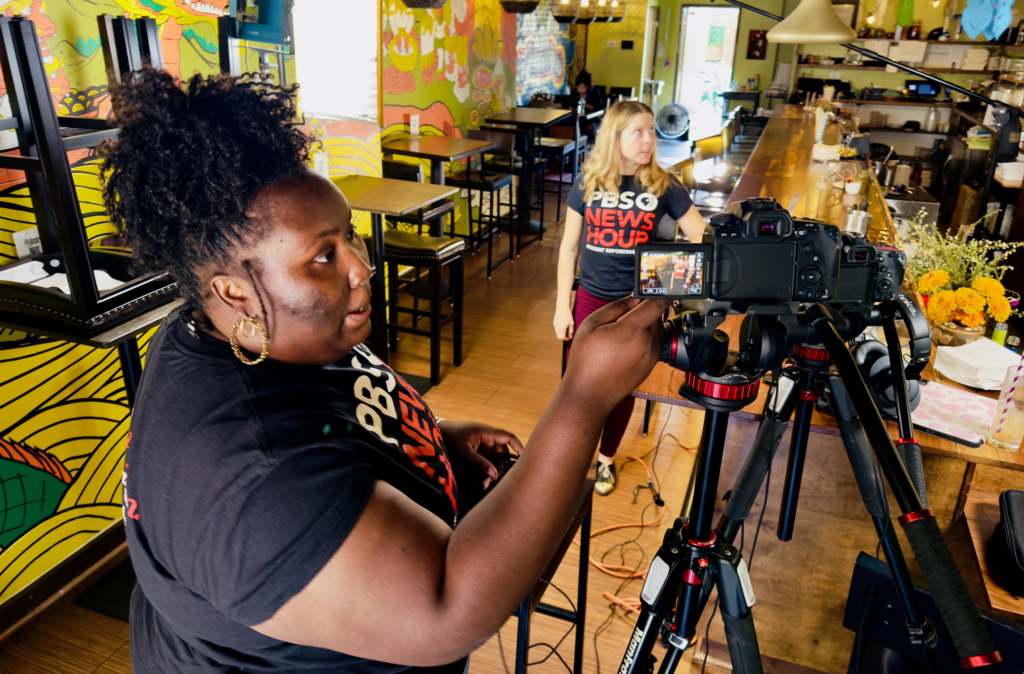
Student Reporting Labs works with students and teachers across the country to report stories for their local communities, news outlets, public media stations, and for the PBS News Hour. Student participants in our program produce solutions-focused journalism about the issues that affect their lives and communities, from gun violence and mental health to climate change and education. They learn how to do interviews, conduct research, identify facts, and tell stories with integrity. They have positive interactions with both their peers and adults that help them understand the world and figure out who they want to be. Their stories reach millions of people through PBS’s broadcast and digital platforms, proving that young voices can produce work that adheres to professional standards when they are supported with training, mentoring, and connections.
What’s more, young people who work alongside professionals to create news understand its value, and become invested in its survival.
For example, when Congress rescinded more than $1 billion previously allocated to public media in the U.S., SRL alum Tyler Pullum shared this on LinkedIn: “Through SRL, I’ve gotten to connect with so many people and had the opportunity to interview leaders like U.S. Secretary of Education Miguel Cardona and [author and entrepreneur] Hank Green. This experience, and the community I’ve found through it, has truly changed my life. I’m now a monthly donor to my local public media stations, and had the chance to serve as a KUT Public Media Ambassador.”
That’s not just a heartwarming testimonial — that’s return on investment.
Other collaborators also are showing there are ways to nurture future journalists and audiences. These include Philadelphia-based WHYY Media Labs; San Francisco’s KQED Youth Media Challenge; The Bell, which runs programs in New York City and Mississippi, and National Public Radio’s Podcast Challenge, as well as associations like the Student Press Law Center, the Journalism Education Association, and the NYC Youth Journalism Coalition. Such programs lean in to the kinds of solutions that the News Literacy Project report identifies: creating more opportunities for young people and journalists to connect, and encouraging students to participate in scholastic journalism programs.
When newsrooms include youth perspectives and publish young journalists’ work, the result is stronger, more nuanced, more representative reporting on key issues. If media organizations don’t have the funding to invite young people in, they can still ask them what stories matter to them, listen to them carefully, or tell stories that meet them where they are.
Funders should view youth media as critical infrastructure that builds trust, relevance and long-term support. Community building with young people and their educators today is the key to future sustainability. Let’s invest in what’s been proven to work.
Leah Clapman is the founder and executive director of PBS News Student Reporting Labs.
The post Youth Media and the Future of News appeared first on Nieman Reports.
In my 16 years building the PBS News Student Reporting Labs (SRL), I’ve never been more anxious about the future. Not only is journalism shedding jobs and desperately searching for new business models while press freedoms melt away, but the majority of young people view the news media as “boring,” “biased,” and “bad.” Eighty-four percent of teenage respondents characterized it using those words in a recent report from the News Literacy Project. This is a flashing red warning signal we can no longer ignore. To build an informed, engaged audience — and workforce — 20 years from now, we need to play the long game and plant the seeds today. Media organizations and funders should proactively involve young people in journalism. There are some stories best told by young people, and youth media programs can help teenagers recognize themselves as important contributors to the news ecosystem, not simply as content consumers. If we don’t invest in building a community that involves the next generation of news creators and consumers, we can’t act surprised if there isn’t one. Bottom-line pressures and federal funding cuts are dismantling many of the programs that serve to build trust with young people, at the very moment when they are needed the most. In just the past two years, the youth media ecosystem in the United States has been gutted. Conde Nast disbanded Teen Vogue, one of the last national publications that spoke to young people about tough issues without condescension. Seattle public radio station KUOW’s RadioActive program, which offered radio training and programs geared toward young people, was shuttered in 2024, as was YR Media, formerly Youth Radio, a California-based program aimed at BIPOC creators which had successfully trained young storytellers for decades. Channel One, which once reached millions of students with in-school broadcasts, is long gone, as are CNN’s Student Bureaus, which once produced stories from schools across the U.S. until corporate cost-cutting sent it to the chopping block in 2014. These initiatives, and others like them, weren’t just cute experiments. These were programs that introduced teens to journalism, taught them about reporting ethics and the effort and processes behind quality, reliable reporting. Most importantly, they gave them reasons to care about, and feel they had a stake in, the future of news. Research from The Media Education Lab at Temple University shows these programs change students’ attitudes toward news. Before and after surveys showed a significant shift toward high quality news, as well as increased interest in civic engagement activities, particularly ones that are digital and collaborative, as well as commitment to problem solving. We have the tools needed to reestablish trust in the media among young people. I see it happen every day. Student Reporting Labs works with students and teachers across the country to report stories for their local communities, news outlets, public media stations, and for the PBS News Hour. Student participants in our program produce solutions-focused journalism about the issues that affect their lives and communities, from gun violence and mental health to climate change and education. They learn how to do interviews, conduct research, identify facts, and tell stories with integrity. They have positive interactions with both their peers and adults that help them understand the world and figure out who they want to be. Their stories reach millions of people through PBS’s broadcast and digital platforms, proving that young voices can produce work that adheres to professional standards when they are supported with training, mentoring, and connections. What’s more, young people who work alongside professionals to create news understand its value, and become invested in its survival. For example, when Congress rescinded more than $1 billion previously allocated to public media in the U.S., SRL alum Tyler Pullum shared this on LinkedIn: “Through SRL, I’ve gotten to connect with so many people and had the opportunity to interview leaders like U.S. Secretary of Education Miguel Cardona and [author and entrepreneur] Hank Green. This experience, and the community I’ve found through it, has truly changed my life. I’m now a monthly donor to my local public media stations, and had the chance to serve as a KUT Public Media Ambassador.” That’s not just a heartwarming testimonial — that’s return on investment. Other collaborators also are showing there are ways to nurture future journalists and audiences. These include Philadelphia-based WHYY Media Labs; San Francisco’s KQED Youth Media Challenge; The Bell, which runs programs in New York City and Mississippi, and National Public Radio’s Podcast Challenge, as well as associations like the Student Press Law Center, the Journalism Education Association, and the NYC Youth Journalism Coalition. Such programs lean in to the kinds of solutions that the News Literacy Project report identifies: creating more opportunities for young people and journalists to connect, and encouraging students to participate in scholastic journalism programs. When newsrooms include youth perspectives and publish young journalists’ work, the result is stronger, more nuanced, more representative reporting on key issues. If media organizations don’t have the funding to invite young people in, they can still ask them what stories matter to them, listen to them carefully, or tell stories that meet them where they are. Funders should view youth media as critical infrastructure that builds trust, relevance and long-term support. Community building with young people and their educators today is the key to future sustainability. Let’s invest in what’s been proven to work. Leah Clapman is the founder and executive director of PBS News Student Reporting Labs. The post Youth Media and the Future of News appeared first on Nieman Reports. Read More