Comercio Internacional

Gobierno y empresarios en la administración de López Obrador

Este texto analiza la relación entre el gobierno de Andrés Manuel López Obrador (AMLO), de 2018 a 2024, y los empresarios a la luz de su objetivo de separar el poder político del económico. Desde la campaña de su primera candidatura en 2006, así como en las de 2012 y 2018, y tras su elección,

Gobierno y empresarios en la administración de López Obrador Read More »
El largo malestar del orden internacional

Cómo la expansión de la hegemonía erosionó las reglas que decía defender  Alejandra López de Alba G. Junio 2026 De la sección Opiniones Oportunas del Consejo Mexicano de Asuntos Internacionales Hay fechas que tranquilizan porque ordenan el caos y ofrecen la ilusión de una ruptura nítida. Decir que la erosión del llamado “orden internacional basado en reglas” comenzó

El largo malestar del orden internacional Read More »

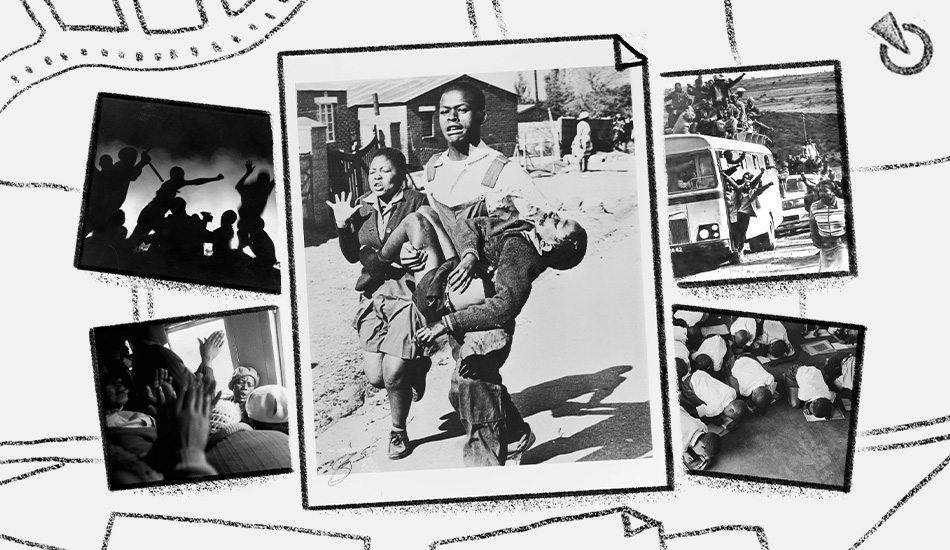
Fifty Years After Soweto: A Struggle Without Documentation Is Not a Struggle

The Twenty-Eighth Art Bulletin (June 2026) This art bulletin is dedicated to Abdullah Ibrahim (1934–2026), the legendary South African jazz musician and anti-apartheid activist who passed away this month. During his lifetime, he weaponised cultural expression – and in particular the piano – into a profound act of political resistance, including through his song ‘Soweto’.

Fifty Years After Soweto: A Struggle Without Documentation Is Not a Struggle Read More »

Building a New Development Theory from the Global South

This issue of the international edition of Wenhua Zongheng (文化纵横) examines how the Global South can build a New Development Theory grounded in its own practice. The articles explore the failures of neoliberalism, China’s role in electrification and industrial cooperation in the Global South, and intellectual debates in Southern economic thought. ​An intellectual biography of

Building a New Development Theory from the Global South Read More »

Review: How Japanese Marxism Shaped a Taiwanese Economist

Chinese intellectuals’ attention to external debates has historically stemmed from the needs of Chinese social reality. While there is nothing intrinsically objectionable about this approach, this has often led to intellectuals overlooking the evolution of significant scholarly debates. For example, the Japanese intellectual world long served as an intermediary for the transmission of Western thought

Review: How Japanese Marxism Shaped a Taiwanese Economist Read More »

The Praxis of Development in the Global South

The Praxis of Development in the Global South We live in an interregnum. The neoliberal order that reorganised global production and thought from the 1980s onward has lost its legitimacy, even among its architects. The Washington Consensus – fiscal austerity, trade liberalisation, privatisation, the subordination of the state to market ‘discipline’ – has been repudiated

The Praxis of Development in the Global South Read More »

Silk Road Manufacturing: An Alternative Path to Globalisation

Since the Belt and Road Initiative (BRI) was proposed in 2013, China’s manufacturing sector has explored international markets and integrated into the global economic cycle. Concurrently, industrialised countries like the United States have sought to maintain their economic dominance by leveraging technological hegemony, control over upstream industrial chains, and protectionist measures to impose technological blockades

Silk Road Manufacturing: An Alternative Path to Globalisation Read More »

China and the Electrification of the Global South: The Case of Pakistan

In May 2025, Pakistan and India experienced one of the most intense regional conflicts of this century.1 India responded by suspending the Indus Waters Treaty (IWT), which had been in effect for 65 years. The IWT was signed in 1960, after nine years of negotiations. Brokered by the World Bank, the treaty is regarded as

China and the Electrification of the Global South: The Case of Pakistan Read More »