Nutrición

Psychological resilience and food skills are favorably linked to gluten-free diet adherence in adults with celiac disease: a cross-sectional study

Publication date: January 2027 Source: Nutrition, Volume 153 Author(s): Mehul Shekar, Sandra Mayol-Kreiser, Ding-Geng Chen, Carol S. Johnston ​Publication date: January 2027Source: Nutrition, Volume 153Author(s): Mehul Shekar, Sandra Mayol-Kreiser, Ding-Geng Chen, Carol S. Johnston Read More
Psychological resilience and food skills are favorably linked to gluten-free diet adherence in adults with celiac disease: a cross-sectional study Read More »

Early Detection of Infants Aged Under Six Months at Risk of Poor Growth and Development: Secondary Analysis of a Prospective Cohort in Senegal

ABSTRACT Child malnutrition is a major global problem, but in many high-burden countries, screening and treatment of acute malnutrition called wasting (weight-for-length z-score < −2SD) only begins at age 6 months. Infants under 6 months ‘at risk of poor growth and development’ are, however, increasingly recognised. Latest 2023 WHO guidelines describe anthropometric, feeding and maternal/infant clinical

Early Detection of Infants Aged Under Six Months at Risk of Poor Growth and Development: Secondary Analysis of a Prospective Cohort in Senegal Read More »

Breastfeeding, Breastmilk Feeding and Formula Feeding Within the Closed, Temporary Accommodation of Australia’s COVID‐19 Quarantine

ABSTRACT During 2021–2022, families with infants and young children were among the > 450,000 people who spent 2 weeks in Australia’s institutional COVID-19 quarantine. Given pre-existing lack of emergency planning for children, there were concerns about whether parents would be adequately supported in this temporary accommodation. This paper reports on research considering the breastfeeding, breastmilk feeding

Breastfeeding, Breastmilk Feeding and Formula Feeding Within the Closed, Temporary Accommodation of Australia’s COVID‐19 Quarantine Read More »

Planetary Health Diet adherence and pregnancy complications: Secondary data analysis of the NICHD Fetal Growth Study – Singletons

Publication date: Available online 15 October 2026 Source: Current Developments in Nutrition Author(s): Shan Xuan Lim, Elizabeth A. DeVilbiss, Priscilla K. Clayton, Jessica L. Gleason, Katherine L. Grantz, Cuilin Zhang, Jagteshwar Grewal ​Publication date: Available online 15 October 2026Source: Current Developments in NutritionAuthor(s): Shan Xuan Lim, Elizabeth A. DeVilbiss, Priscilla K. Clayton, Jessica L. Gleason,

Planetary Health Diet adherence and pregnancy complications: Secondary data analysis of the NICHD Fetal Growth Study – Singletons Read More »

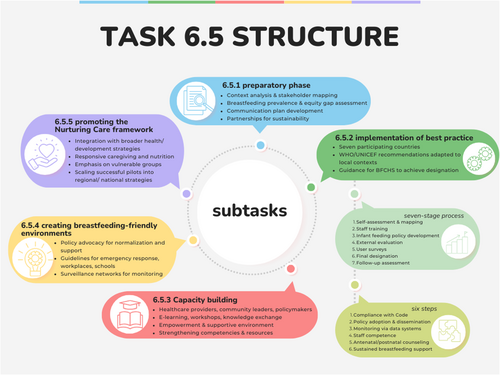
The Baby‐Friendly Community and Health Services Initiative Within the Joint Action PreventNCD: Rationale, Structure and Methodology

Task 6.5 BFC&HS structure: subtasks and activities ABSTRACT The first 1000 days of life are a critical period for establishing lifelong health and development. Breastfeeding, as part of the Nurturing Care Framework, provides unique immunological, nutritional, and psychosocial benefits, while also contributing to the prevention of obesity, diabetes, and other non-communicable diseases (NCDs). Despite its

The Baby‐Friendly Community and Health Services Initiative Within the Joint Action PreventNCD: Rationale, Structure and Methodology Read More »

Research and Outcome Priorities for the Canada Prenatal Nutrition Program in Ontario: A Community‐Engaged Modified Delphi Study

ABSTRACT The Canada Prenatal Nutrition Program (CPNP) is a federal initiative that addresses the critical impact of early nutrition and perinatal care on health outcomes by providing community-based perinatal health and nutrition services to socially and economically vulnerable women and their infants. Using a flexible, locally adaptable community programming model, the CPNP aims to improve

Research and Outcome Priorities for the Canada Prenatal Nutrition Program in Ontario: A Community‐Engaged Modified Delphi Study Read More »

Three Decades of Socioeconomic Inequality in India’s Breastfeeding Indicators, 1993–2021

ABSTRACT Although existing literature heavily focuses on the health outcomes of exclusive breastfeeding (EBF) in India, studies addressing socioeconomic inequalities across a broad spectrum of breastfeeding indicators remain scarce. We utilized five waves of National Family Health Survey data (1993–2021) to analyze temporal trends and socioeconomic inequalities, proxied by maternal education (no formal schooling, 1st–5th

Three Decades of Socioeconomic Inequality in India’s Breastfeeding Indicators, 1993–2021 Read More »

Impact of Central Asia Stunting Initiative on Stunting and Anemia Among Children and Women of Afghanistan

ABSTRACT The Central Asia Stunting Initiative (CASI) is a program designed to address malnutrition among women of reproductive age and children under five in Badakhshan Province, Afghanistan, a region facing significant nutritional challenges. This study used a pre-post design to assess the impact of CASI interventions, with cross-sectional surveys conducted at baseline and midline among

Impact of Central Asia Stunting Initiative on Stunting and Anemia Among Children and Women of Afghanistan Read More »

Feasibility and Accuracy of Caregiver‐Led Child Growth Measurements for Remote Healthcare

ABSTRACT Background and Aims Remote healthcare is expanding, with accurate growth data essential for nutritional care. Guidance for routine caregiver-led measurements is limited and largely untested. This study evaluated the feasibility and accuracy of caregiver-led child growth measurements at home, compared to ‘gold-standard’ measurements in the hospital. Methods Caregivers of children attending outpatient appointments completed

Feasibility and Accuracy of Caregiver‐Led Child Growth Measurements for Remote Healthcare Read More »